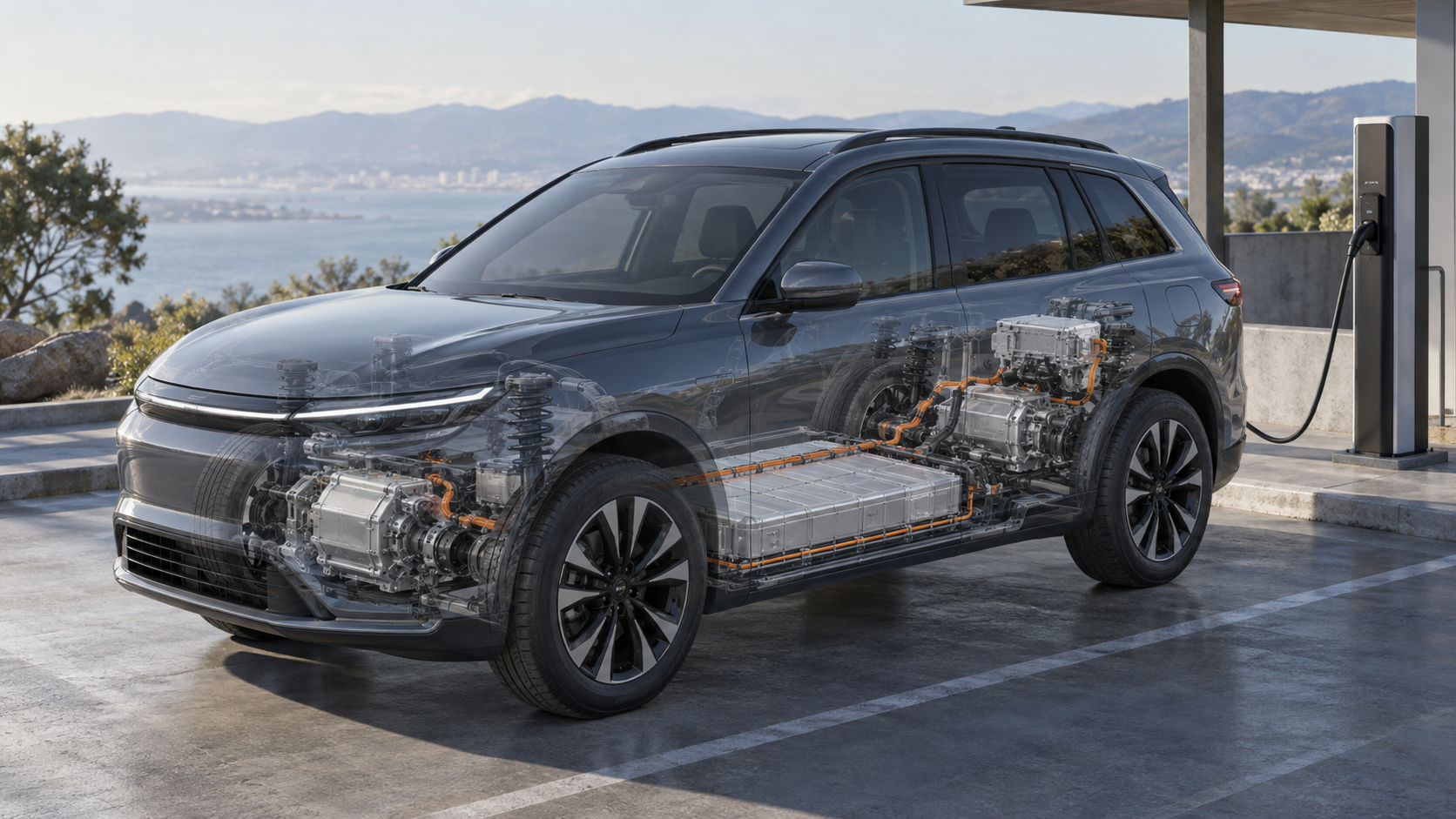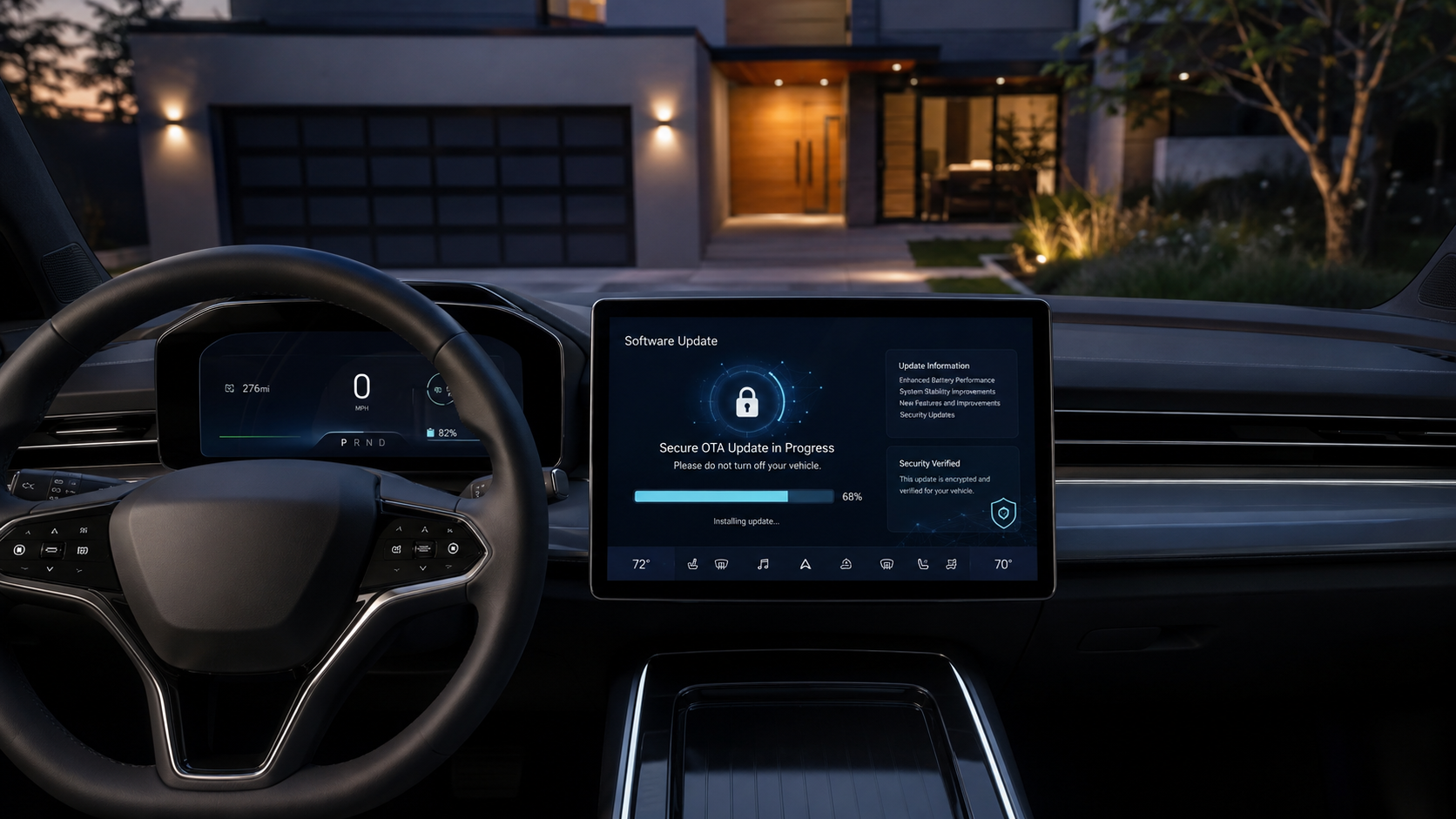
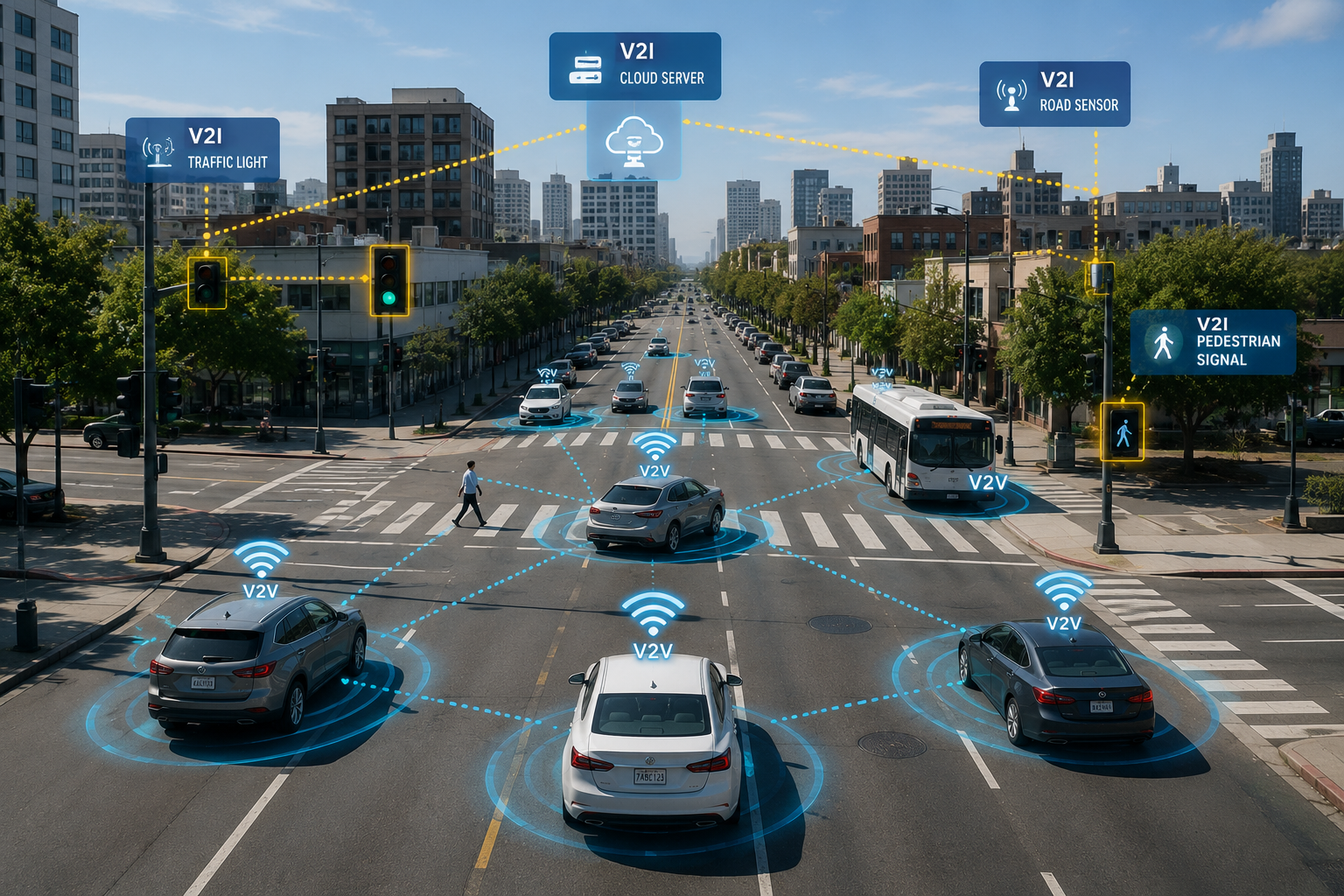
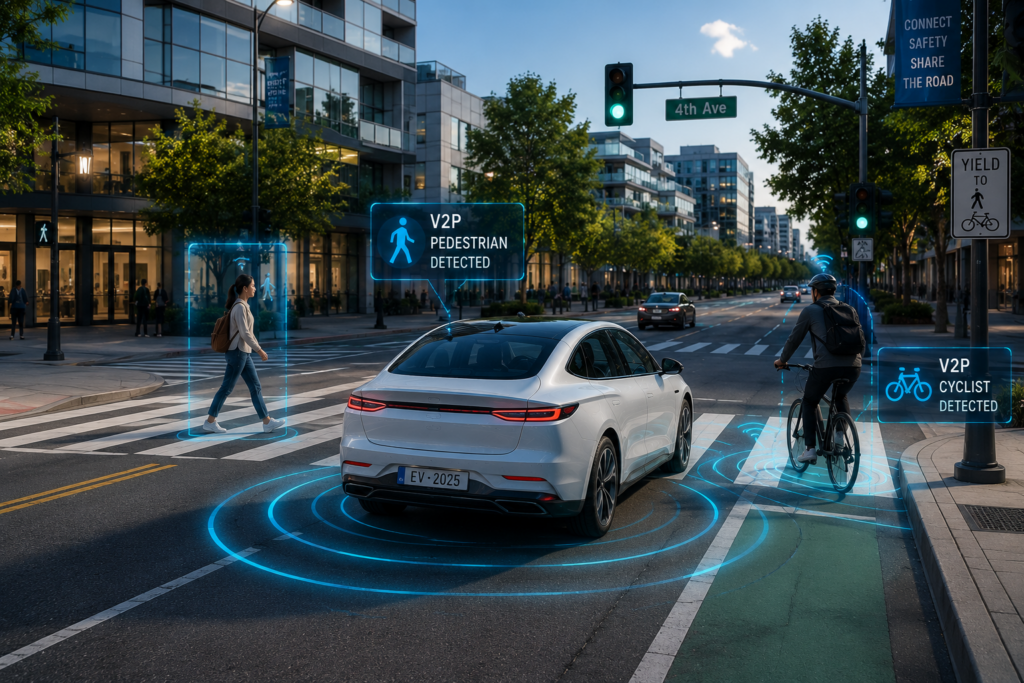
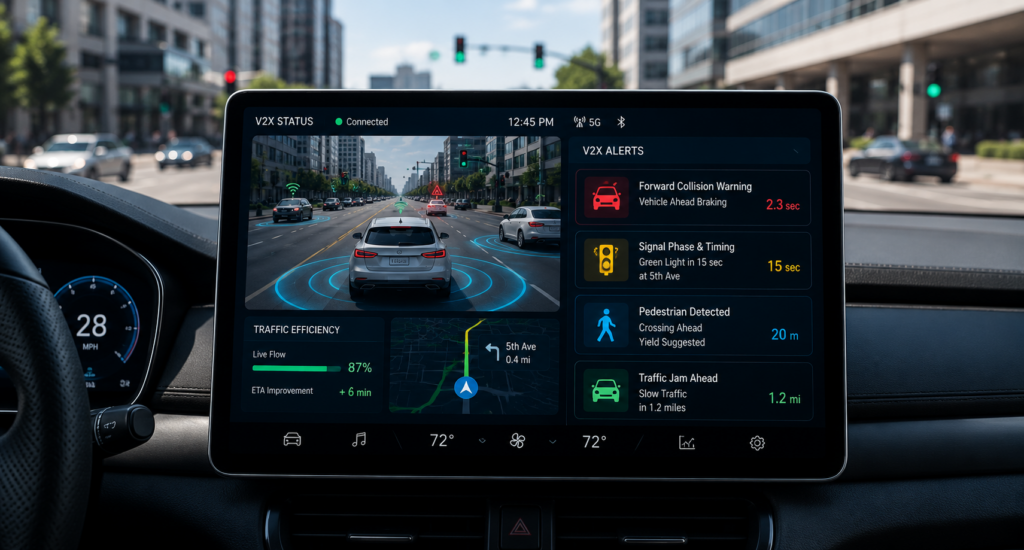
As vehicles become more connected, Vehicle-to-Everything (V2X) technology is emerging as a key innovation for 2026. V2X allows cars to communicate with each other (V2V), the infrastructure (V2I), and even pedestrians (V2P) to enhance safety, reduce congestion, and integrate seamlessly with electric vehicle (EV) grids.
V2X is not just a futuristic concept—automakers, tech companies, and governments worldwide are actively deploying V2X-ready systems to improve transportation efficiency and reduce accidents.
How V2X Works
V2X uses short-range wireless communication protocols, including Dedicated Short Range Communications (DSRC) and Cellular V2X (C-V2X), to enable real-time data exchange. Vehicles can share speed, location, braking events, and hazard alerts with nearby cars and traffic signals. This enables anticipatory responses that prevent collisions and improve traffic flow.
Learn more about connected vehicle technology in our Car Technology section.
Key Benefits of V2X Technology
- Enhanced Safety: Early warnings for collisions, blind spots, and pedestrians reduce accidents.
- Traffic Efficiency: Real-time communication with traffic lights and signals optimizes flow.
- Electric Vehicle Integration: V2X enables smart grid charging and energy management for EVs.
- Autonomous Driving Support: Provides additional situational awareness for semi- and fully autonomous vehicles.
- Environmental Impact: Smoother traffic reduces emissions and fuel consumption.
Applications in 2026
By 2026, V2X technology will be increasingly embedded in both new EVs and connected cars. Key applications include:
- Intersection Safety: Vehicles can receive traffic light status, reducing red-light collisions.
- Emergency Vehicle Alerts: Cars automatically yield for approaching ambulances or fire trucks.
- Fleet Management: Logistics companies use V2X to optimize delivery routes and monitor driver behavior.
- Pedestrian Protection: Smartphones and wearables communicate with nearby vehicles to prevent accidents.
Government guidelines from NHTSA V2X are helping standardize protocols across manufacturers, ensuring interoperability.
Challenges to V2X Adoption
While V2X offers immense promise, adoption faces several challenges:
- Infrastructure Costs: Smart traffic lights and roadside units require significant investment.
- Cybersecurity: Secure communication channels are essential to prevent hacking.
- Standardization: Different manufacturers and regions may adopt incompatible systems.
- Privacy Concerns: Sharing location and driving data raises user privacy issues.
Industry leaders and regulators are working to overcome these barriers with rigorous testing and unified standards.
The Future of V2X and Smart Mobility
V2X represents a cornerstone of the future smart mobility ecosystem. By integrating vehicles, infrastructure, and pedestrians, cities can achieve safer roads, more efficient traffic, and seamless EV adoption.
Explore how V2X interacts with autonomous and electric vehicles in our Future of Cars section.
Conclusion
Vehicle-to-Everything communication is transforming how we drive. By 2026, connected vehicles will share critical information in real time, enhancing safety, reducing congestion, and enabling smarter EV integration. Drivers and cities adopting V2X technology will benefit from improved traffic flow, accident prevention, and an overall safer road network.
Stay informed about connected car innovations by visiting Motor Car Driver Blog and following updates from InsideEVs, Electrek, DOE V2X, and Reuters Tech.