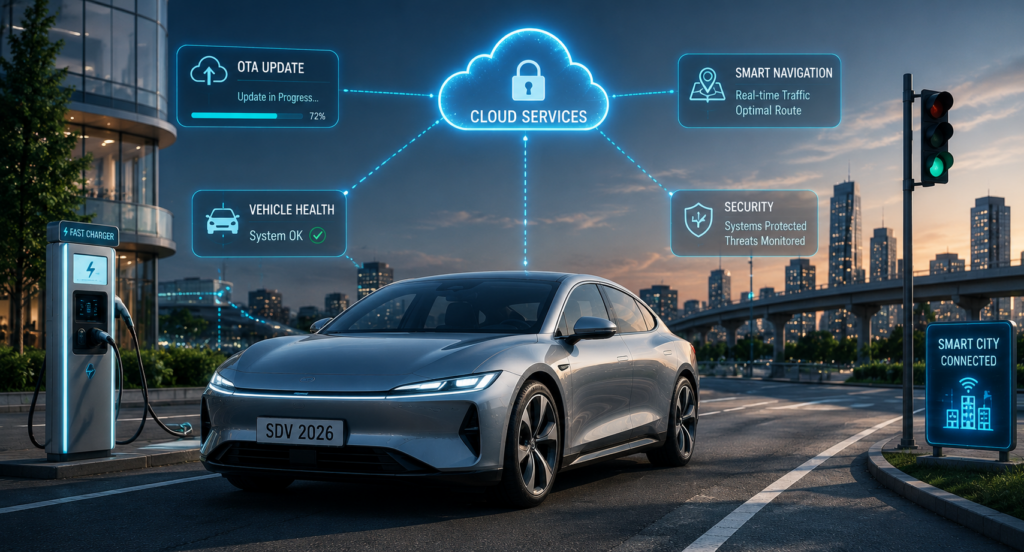
Cars are becoming less like fixed machines and more like connected digital platforms. In 2026, one of the biggest automotive technology trends is the rise of software-defined vehicles, or SDVs. These vehicles rely heavily on centralized computing, connected software, cloud services, and over-the-air updates to manage features that once depended almost entirely on physical hardware.
For drivers, this shift means a vehicle may continue changing after it leaves the showroom. Infotainment systems can gain new functions, navigation software can improve, bugs can be corrected, and some vehicle settings may be refined without a dealership visit. Automakers are also building platforms that connect software with driver-assistance systems, charging, climate controls, lighting, and other vehicle functions.
The trend is becoming increasingly visible. Hyundai has described a growing software-defined vehicle strategy built around data, artificial intelligence, and OTA updates, while Google has expanded Android Automotive toward a broader software-defined vehicle platform that can support vehicle functions beyond infotainment.
What Is a Software-Defined Vehicle?
A software-defined vehicle is a car in which software plays a major role in controlling, improving, or personalizing vehicle functions. Traditional cars also use software, but many older vehicles rely on dozens of separate electronic control units that operate largely independently.
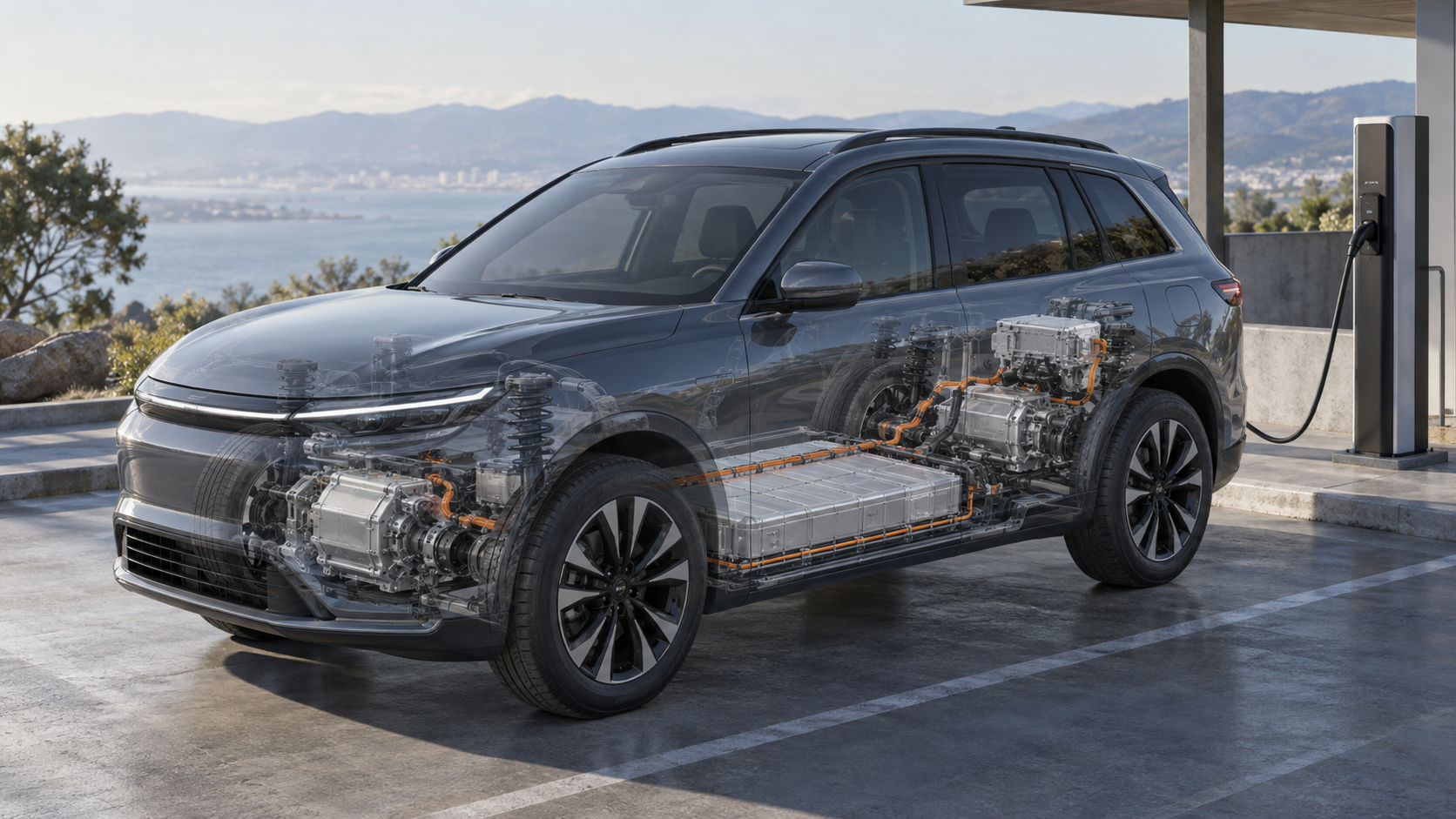
Newer SDV architectures are moving toward more centralized computing. Instead of every function having its own isolated controller, powerful onboard computers can coordinate several systems at once. That structure can simplify software development and make it easier for automakers to introduce updates over the life of the vehicle.
Google’s Android Automotive announcement highlighted this transition by describing an open-source platform designed to extend beyond the dashboard into additional vehicle functions. Android’s SDV documentation also describes support for instrument clusters, body controls, cameras, telemetry, diagnostics, updates, and other automotive systems.
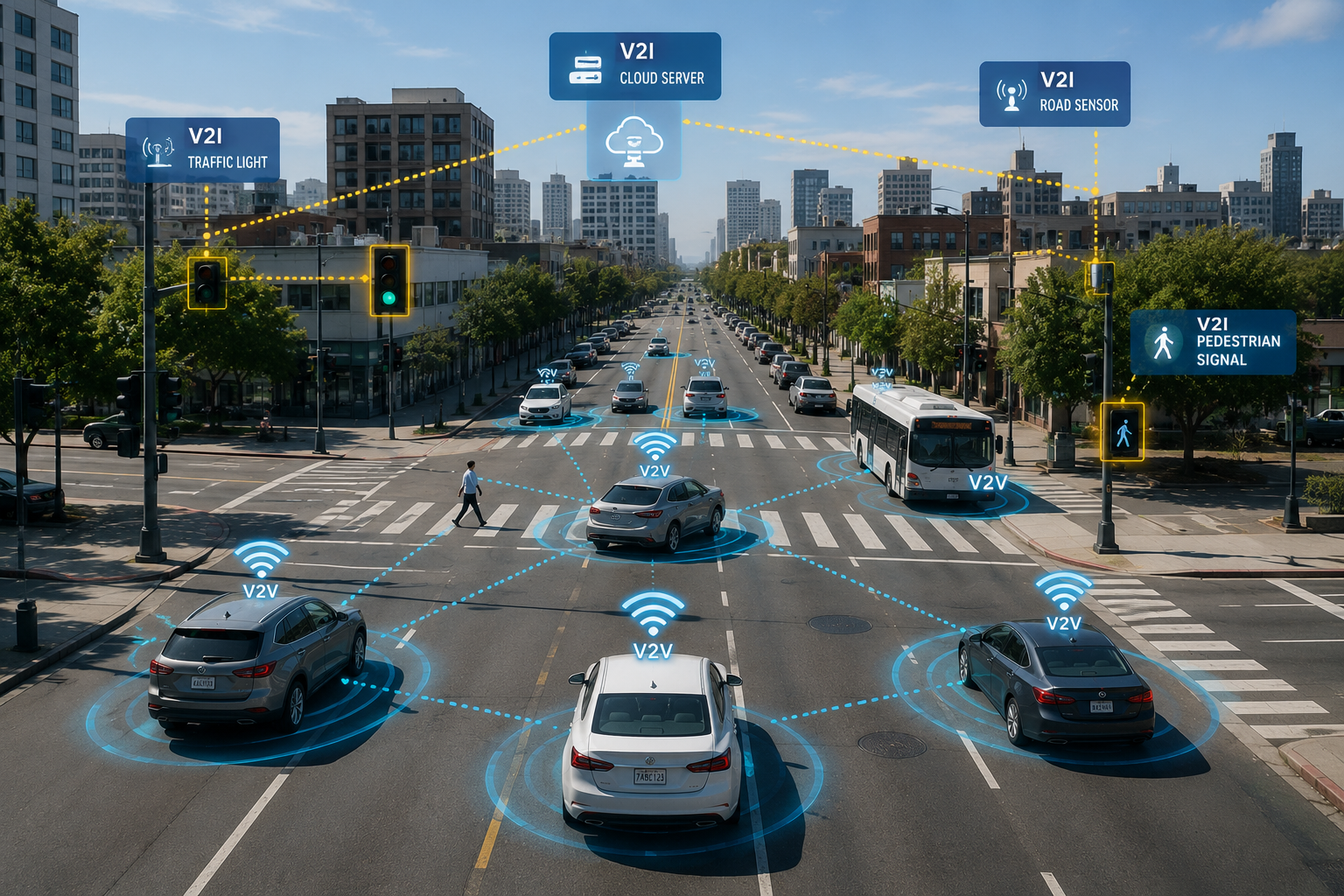
This evolution complements other connected technologies already appearing on modern roads. Motor Car Driver readers can also explore our guide to V2X vehicle communication, which explains how connected cars can exchange information with vehicles and infrastructure.
Why Over-the-Air Updates Matter
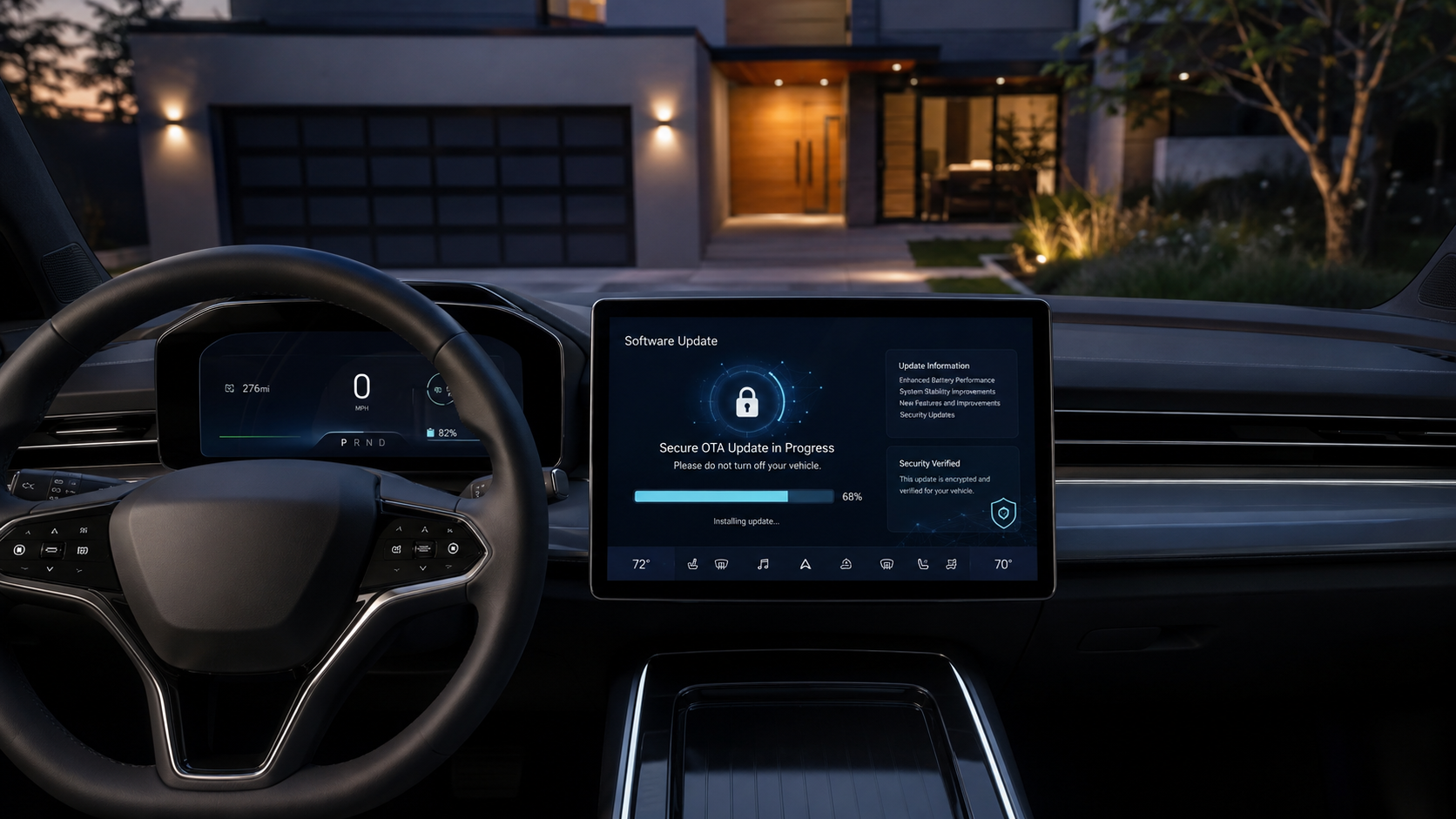
Over-the-air, or OTA, software updates allow compatible vehicles to download software through a wireless connection. The concept is familiar to anyone who updates a smartphone or computer, but its role in cars is becoming much more important.
Depending on the manufacturer and vehicle, OTA updates may improve infotainment features, navigation, connectivity, user interfaces, charging behavior, or other supported systems. Some updates may correct software problems, while others can introduce features after the vehicle has already been purchased.
Chevrolet’s vehicle software update guidance, for example, explains that eligible vehicles can download updates in the background and then install them while the vehicle is parked. The exact capabilities, requirements, and installation process vary by model, so owners should always follow the instructions provided by their manufacturer.
This ability to update cars remotely could reduce some dealership visits and help automakers respond more quickly to software issues. However, OTA technology does not mean every mechanical or safety issue can be solved digitally. Hardware failures, damaged components, recalls requiring physical repairs, and many maintenance problems will still require hands-on service.
Cars Can Gain Features After Purchase
One of the biggest changes created by software-defined vehicles is the idea that a car’s capabilities may continue evolving after delivery. In the past, most features were determined when the vehicle was built. New functionality often required replacing hardware or buying a newer model.
SDVs change that model. If the necessary sensors and hardware are already installed, software may be able to activate, improve, or personalize certain functions later. Mercedes-Benz is using its MB.OS platform to connect vehicle systems and support ongoing updates. The company says its newer vehicles can receive over-the-air updates for numerous vehicle functions.
This can make ownership more flexible, but it also introduces new questions. Some features may be included with the vehicle, while others could be sold as optional digital upgrades or subscriptions. Drivers shopping for a new car should therefore look beyond the sticker price and ask which connected services require ongoing fees.
AI Is Becoming Part of the Software-Defined Car
Artificial intelligence is another reason SDVs are receiving so much attention in 2026. Automakers increasingly want software that can learn from vehicle data, personalize driver preferences, improve voice assistants, and support advanced safety systems.
Hyundai’s 2026 strategy describes a data-driven cycle in which vehicle information can be analyzed to improve AI services and new software features before those improvements are sent back to compatible vehicles through OTA updates. The company’s 2026 CEO Investor Day announcement specifically connects software-defined vehicles, AI, data analysis, and OTA deployment.
AI can also work alongside cameras and driver-assistance technology. For a related look at this trend, see our article on AI dash cams and smart driving technology.
How SDVs Connect With Driver-Assistance Systems
Modern driver-assistance systems depend on cameras, radar, ultrasonic sensors, maps, processors, and software working together. As vehicle architectures become more centralized, automakers may be able to improve some software-supported functions more efficiently.
That does not mean an OTA update can magically transform every car into an autonomous vehicle. Advanced driving features still depend on installed sensors, computing hardware, regulatory requirements, and extensive validation. Software can only work within the capabilities of the vehicle’s physical equipment.
Drivers should also understand the limits of assistance technology and continue supervising the vehicle as required. Our guide to advanced driver-assistance systems explains common ADAS features and how they support safer driving.
Cybersecurity Becomes More Important
Connected vehicles create useful new capabilities, but they also make cybersecurity a critical part of automotive design. A car that communicates with cloud services and receives remote software updates needs strong protections against unauthorized access and corrupted software.
The National Highway Traffic Safety Administration recommends a layered approach to vehicle cybersecurity. NHTSA also conducts research into firmware updates and OTA update mechanisms because software integrity can affect vehicle safety.
For drivers, basic habits matter. Owners should install legitimate manufacturer updates, avoid unknown aftermarket devices or unauthorized software modifications, protect connected accounts with strong credentials, and verify update notifications through official vehicle apps or manufacturer websites when something appears suspicious.
What Software-Defined Cars Mean for Repairs
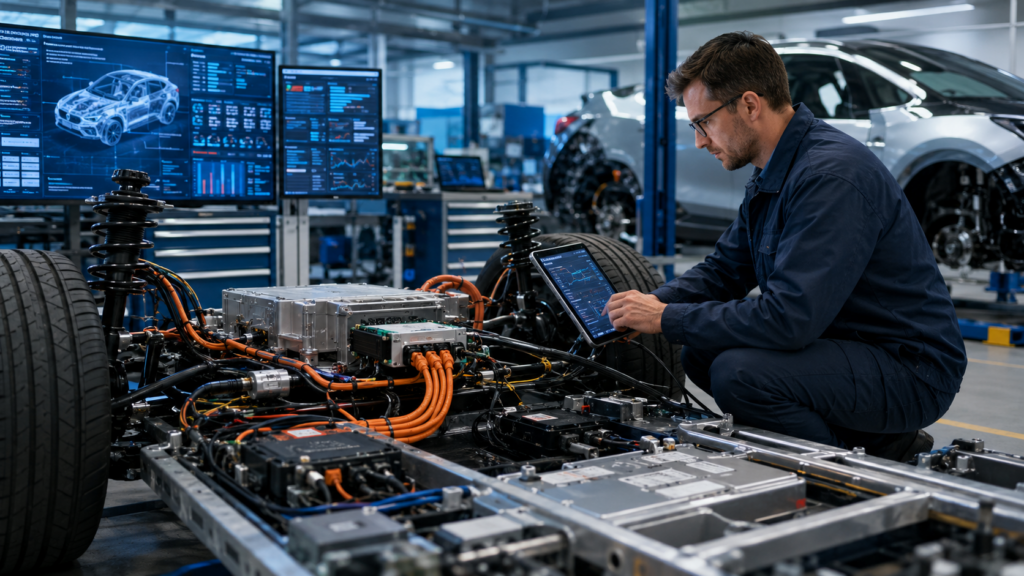
The growth of software-defined vehicles may also change automotive repair. Mechanics increasingly need diagnostic tools, software access, technical training, and an understanding of connected electronic systems in addition to traditional mechanical skills.
A warning light that once pointed directly to a mechanical component may now involve communication between sensors, software, controllers, and cloud-connected services. Repairs can therefore require both physical inspection and digital diagnosis.
At the same time, some problems may become easier to resolve. If an issue is purely software-based and the manufacturer has developed a validated fix, an OTA update may eliminate the need for a shop visit. This could be especially useful for widespread software bugs affecting large numbers of vehicles.
What Buyers Should Check Before Purchasing an SDV
As software becomes a bigger part of the ownership experience, shoppers should evaluate a car’s digital ecosystem as carefully as its engine, battery, interior, or cargo space. Before buying, ask how long the manufacturer plans to support software updates, whether updates require a paid connectivity plan, and which features may require subscriptions.
- Check whether OTA updates cover only infotainment or additional vehicle systems.
- Ask how long software and security support is expected to continue.
- Review privacy settings and what vehicle data may be collected.
- Confirm which connected features require recurring fees.
- Find out what happens if an update fails or cannot be installed.
- Make sure important safety features still work if a subscription expires.
Electric vehicle buyers should pay particular attention because EVs often rely heavily on software for charging, energy management, route planning, battery conditioning, and efficiency. For a broader look at the changes happening in this market, read our guide to electric vehicle trends in 2026.
The Future of Software-Defined Vehicles
Software-defined vehicles are unlikely to replace traditional automotive engineering. Instead, they are changing how mechanical systems, electronics, connectivity, and software work together. Engines, motors, batteries, brakes, steering components, tires, and suspension systems still matter. The difference is that more of the driving experience is now coordinated and refined through software.
Android’s Automotive documentation shows how quickly the field is expanding, with its SDV platform moving beyond infotainment into multiple vehicle domains. Automakers are following similar paths with their own operating systems and centralized computing architectures.
For drivers, the result could be cars that remain technologically current for longer, receive fixes faster, offer more personalization, and gain selected features after purchase. The tradeoff is that buyers will need to pay more attention to software support, cybersecurity, privacy, subscriptions, and long-term compatibility.
Final Thoughts
Software-defined vehicles are one of the most important automotive trends of 2026 because they change the relationship between a driver and a car. Instead of remaining largely unchanged after leaving the dealership, a connected vehicle can continue receiving software improvements throughout its usable life.
OTA updates, AI systems, centralized computing, connected services, and advanced driver-assistance technology are gradually turning vehicles into evolving digital platforms. Drivers do not need to become software engineers to benefit from these changes, but understanding how updates, subscriptions, privacy, and cybersecurity work will become increasingly important when choosing and owning a modern car.